
Every building project carries risk, from property damage and theft to injury and unforeseen delays. Whether you are managing a small extension, a full new build or a commercial scheme, the right building site insurance provides crucial protection throughout construction. Understanding how construction site insurance works, what it covers and how to arrange it effectively will help avoid costly setbacks and legal complications.
Basics Of Building Site Insurance
Before any work begins, it is important to understand what building site insurance covers and who is responsible for arranging it. This section introduces the fundamentals of builders insurance and how it fits into the wider project.
Purpose of building site insurance
Building site insurance, often referred to as contractors all risks insurance, is designed to protect a project during construction, rather than once the building is finished. It provides cover for accidental damage to the works, on-site materials and potential liabilities to third parties. Its aim is to safeguard people, property and equipment both on the site and in its immediate surroundings.
Who needs building site insurance
Several parties may be responsible for taking out construction site insurance. These include the property owner, developer, main contractor or self builder. Contracts usually outline who must arrange cover and name all relevant insured parties. This ensures everyone involved has protection throughout the construction phase, from funding drawdowns to final handover.
When cover should start and end
Ideally, self build site insurance or broader builders insurance should begin before any materials arrive or groundwork starts. Early cover ensures protection from the moment risk begins. The policy should remain in place until the project reaches practical completion or handover, as specified in the contract terms.
Main Types Of Building Site Cover
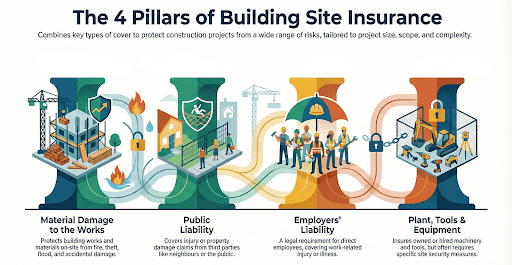
Construction projects vary widely, and so do the risks involved. Most building site insurance policies include a combination of key covers tailored to the project size and complexity.
Material damage to the works
This section of the policy protects the building works, including materials stored on site or in transit. It covers common risks such as fire, theft, storm, flood and accidental damage. For renovation site insurance, it can also include cover for the existing structure (depending on the policy wording).
Public liability on the site
Public liability insurance protects against injury or property damage claims from third parties. This could include neighbours, delivery drivers or members of the public. Site liability insurance is vital for maintaining good relationships with those near the project and defending against unexpected legal claims.
Employers liability for workers
If the policyholder directly employs labour, they are legally required to have employers liability cover. This protects against injury or illness linked to working on the project and is an essential part of any construction site insurance where direct employment is involved.
Plant, tools and hired equipment
Cover for machinery and tools can be included in the policy, whether owned or hired in. This includes diggers, scaffolding, generators and hand tools. Policies typically set security conditions for theft claims, so it is important to ensure the site meets these requirements to maintain full protection.
Building Site Insurance For Different Projects
Not all building projects look the same, and neither should the insurance. This section explores how cover can be adapted to different construction scenarios.
Small extensions and renovation work
Even small jobs carry significant risk. A minor project could still lead to injury, third-party property damage or fire. Many home insurance policies exclude larger building works, making standalone renovation site insurance essential for homeowners undertaking upgrades or extensions.
New build and self build homes
Self builders need comprehensive protection even if trades on site carry their own insurance. Self build site insurance should include cover for the works, materials, liability and plant. In many cases, lenders will require proof of this insurance before releasing funds for the next stage of the build.
Commercial and mixed use schemes
Larger developments demand broader cover. These often involve multiple contractors and stakeholders, which makes joint names policies common. This ensures that the developer, funders and main contractors are protected equally under the commercial building site insurance policy.
Gaps And Exclusions To Watch
No insurance policy covers everything. Understanding common exclusions and conditions helps prevent problems if you ever need to make a claim.
Common exclusions in building site insurance
Standard exclusions can include gradual wear and tear, defective design or workmanship and issues that arise after completion if the building is left unoccupied. In higher-risk areas, exclusions around flood, subsidence or terrorism may apply unless specifically added to the policy.
Conditions that can undermine cover
Insurers may impose conditions for site security, safe storage of flammable materials and hot works procedures. If these conditions are not followed, it could result in reduced payouts or rejected claims. Always ensure that the team understands and adheres to the policy conditions from day one.
High risk activities that need extra checks
Certain works may require special terms or higher limits, including basement digs, structural alterations, temporary works or work at height. These activities should be clearly disclosed when completing proposal forms to ensure accurate cover is in place.
How Insurers Set The Premium
Understanding how premiums are calculated can help you make informed decisions and avoid over or underinsuring the works.
Factors that affect the cost of building site insurance
Insurers consider a range of factors including contract value, project duration, nature of the works, location and the claims history of the builder. Projects involving complex designs, restricted access or listed buildings are generally seen as higher risk and attract higher premiums.
Sum insured and project value
The sum insured should reflect the full cost to rebuild the works, including labour, materials and fees. If the value is set too low, an average clause could apply, reducing any claim proportionally. Ensuring accurate sums insured is a key step in protecting your investment.
Ways to keep cost under control without cutting corners
A strong health and safety record, good site security and an experienced build team can reduce the risk profile, which may lower premiums. Another option is to choose a higher excess, which reduces cost while still maintaining meaningful cover for large losses.
Practical Steps To Arrange Building Site Insurance
Being prepared and providing the right information makes arranging site cover faster and more effective.
Information to provide to the insurer or broker
To quote accurately, insurers need clear details of the project including design drawings, build specifications, contract value, programme, site access and security arrangements. They will also want information on the experience of the contractor and any previous insurance claims.
Checking contracts and joint names cover
Standard contracts often state who is responsible for arranging insurance. Joint names cover is common and means multiple parties are protected under one policy. This prevents subrogation claims between insured parties and simplifies the claims process.
Managing documents and proof of cover on site
Keep the policy wording, schedule and certificates in a secure, accessible file on site. Funders, inspectors or clients may ask for proof of building site insurance during visits or at key milestones in the project.
Claims On Building Site Insurance
When something goes wrong, a well-managed claim can make all the difference. Knowing what to do and acting fast will support a smooth resolution.
What to do when an incident happens on site
The first step is to make the area safe and prevent further damage. Then report the incident to the insurer as soon as possible using the contact details provided. These should be part of the site’s health and safety pack or insurance file.
Evidence and reporting requirements
Photos of the damage, witness statements, police reports for theft and clear documentation all help support your claim. Keep up-to-date records of the site, materials delivered, values and any project changes, as these will all help verify the loss.
Learning from claims for future projects
Every claim gives insight into site risks, procedures and potential improvements. Reviewing the cause and outcome helps improve controls on future projects and may lead to better terms when arranging future building site insurance.
Key checks before work starts
The right building site insurance gives peace of mind by protecting your works, team and nearby surroundings. Ensuring accurate policy values, clear responsibilities and strong site practices helps turn paperwork into genuine on-site protection.
Contact Buildsafe today to compare building site insurance for your next project and ensure your site is fully protected.