

A new build home can offer the fresh start many buyers are looking for, but it also comes with responsibilities and potential risks. A new home 10 year warranty is designed to offer peace of mind by protecting against major structural issues during the early life of the property.
New Build Home Warranty Explained
Understanding the basics of a new build home warranty helps buyers know what to expect if things go wrong after completion. These policies are often required by lenders and can make a real difference to long-term confidence in your property.
How a new home 10 year warranty works
A new build home warranty is a structural warranty designed to protect homeowners against significant defects in the construction of their property. It typically runs for ten years, beginning from the date of legal completion or first occupation.
The warranty is not a general home insurance policy, but a specific product focused on structural defects and certain key building elements that could affect the safety or usability of the home.
Stages of cover during the ten years
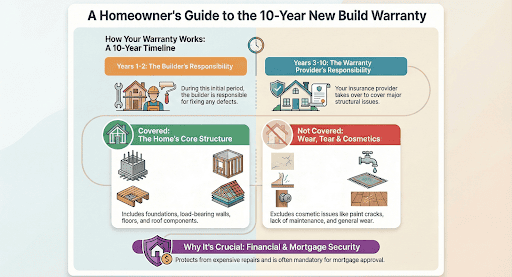
Most new build warranty policies are split into two key periods. In the first two years, the builder is responsible for fixing any defects that fall under the terms of the warranty. During this time, homeowners should report issues directly to the builder.
From year three onwards, the warranty provider becomes responsible for addressing certain types of structural issues. This longer phase of protection focuses on major defects that could affect the home’s integrity.
New build warranty and building control
A new build warranty does not replace building control or planning permission, as explained in our guide to structural warranty vs building control inspection. While the warranty provider often carries out technical inspections during construction, their focus is on identifying risks that could lead to structural failure in the future.
What A New Home 10 Year Warranty Can Cover
New build warranty cover can vary depending on the provider, but most policies follow a similar structure. Understanding what is (and isn’t) included is key when reviewing your documents.
For examples, see our guide to 10 common issues covered by a new build warranty.
Structure and foundations
The core of any 10 year house warranty is protection for the building’s structure. This includes foundations, load-bearing walls, floors and roof components. If a defect arises that makes the home unsafe or unfit for normal use, the warranty may cover repair or replacement.
Weatherproofing and water ingress
Many new build warranties also include cover for water ingress through the building envelope. This might involve external walls, roofs or windows, and typically applies for a shorter period than the main structural warranty.
For example, some policies offer five years of water damage cover for water ingress issues, after which they no longer accept claims related to damp or leaks.
Shared areas and common parts
For flats and other shared housing schemes, new build warranty cover often includes shared areas such as stairwells, corridors, plant rooms and entrance lobbies. Buyers should always check who is responsible for making a claim. This might be the freeholder or managing agent, depending on the lease terms.
Why You Need A New Build Home Warranty
A new home 10 year warranty provides crucial financial protection and legal structure in case something goes wrong with your property. It also supports resale value and mortgage approval.
Protection against serious defects
Structural problems can be incredibly expensive to fix, with some repairs costing tens of thousands of pounds. A warranty acts as a safety net, particularly if the builder goes out of business or fails to meet their obligations.
Support for mortgage lenders and buyers
A recognised warranty provider can be an important consideration for mortgage lenders, meaning building warranties and mortgage approval are closely connected. Without an approved 10 year house warranty, securing funding can become difficult or even impossible.
A recognised new build warranty also makes your home more attractive to future buyers, giving them confidence in the structure and condition of the property.
Peace of mind for the first ten years
The early years of a new home are when hidden construction faults are most likely to show. A warranty helps you navigate this period with more certainty, supporting better financial planning for other expenses like decoration and maintenance.
Limits Exclusions And Small Print
While structural warranty cover is comprehensive, every policy has its limits. Reviewing the fine print ensures you understand your rights and responsibilities from the outset.
Financial limits and excess
Most new build warranties set a maximum amount the provider will pay per claim and over the life of the policy. An excess may also apply per claim, which is the amount the homeowner must pay towards any repair costs.
Common exclusions in new build home warranties
Certain issues fall outside warranty cover, including general wear and tear, lack of maintenance, and cosmetic defects like paint cracks or hairline plaster cracks. Internal fittings, floor finishes and decorative elements are rarely included unless damaged by a covered structural issue.
Your responsibilities as the homeowner
Homeowners must carry out basic maintenance such as clearing gutters and preventing damp. You also need to report defects in the way set out in the warranty terms, usually in writing and within specific time limits.
Choosing A New Build Home Warranty Provider
Not all structural warranty providers are equal. When buying a new build home or starting a development, make sure the warranty in place is with a reputable company that meets key lender requirements.
Provider recognition and lender approval
Check that the warranty provider appears on the approved list for major mortgage lenders. This avoids problems during the mortgage process or when reselling the property later on.
Financial strength and claims record
It is essential that your chosen provider has the financial backing to support claims throughout the ten year period. Look for insurers with strong credit ratings and a proven history of paying valid claims without delay.
Inspection quality and technical support
Good providers support construction quality by inspecting key stages of the build. This technical oversight reduces the likelihood of serious issues reaching the buyer in the first place.
Cost Of A New Home 10 Year Warranty
The cost of structural warranty cover is typically included in the price of a new build home. However, it’s still important to understand who pays, how much, and what you’re getting for the premium.
Who pays for the warranty
In most cases, the developer or builder purchases the warranty before marketing the homes. The cost is absorbed into the sale price of each unit, so buyers don’t pay separately but should still be aware of the value being provided.
Factors that affect cost
The cost of a warranty varies depending on build complexity, ground risk, building materials and the reputation of the contractor. Taller buildings, basements and unusual construction techniques may lead to higher premiums. For a detailed breakdown of pricing and practical ways to manage expenditure, read our guide on New Build Warranty Cost: What to Expect and How to Save.
Value beyond the price
While it may be tempting to go for the cheapest cover, this can lead to tighter limits and broader exclusions. Choosing a strong provider with clear policy wording and a robust claims process usually offers better long-term value.
Making And Managing A Warranty Claim
If defects appear, knowing how to handle the process can make the difference between a smooth resolution and a drawn-out dispute.
Spotting signs of possible structural defects
Look for persistent cracks in walls, sticking doors, sloping floors or signs of water damage. Document these signs with photos and written notes, including dates and areas affected.
How to report problems under your warranty
In the first two years, you should raise concerns with the builder directly. If they fail to act, or if the issue arises later in the warranty period, the next step is to contact the warranty provider in writing with full details.
Evidence and investigations
The warranty provider may instruct an inspector or request a report from a structural engineer. Keeping records of emails, snagging reports and earlier inspections helps build a strong case.
Extra Points For Flats And Shared Ownership
Shared living arrangements and leasehold structures come with unique considerations when it comes to warranty claims.
Apartment blocks and mixed schemes
Warranty cover extends to the whole building, not just individual flats. Claims for issues like roof failure or cladding defects are typically handled by managing agents or freeholders. Read our guide to New Home Warranty for Flats and Apartments: What Developers Need to Know for specific guidance on multi-unit projects.
Shared ownership and social housing units
Homes within shared ownership or affordable housing schemes may also benefit from a social housing warranty. Lease terms will usually outline responsibilities for reporting and resolving defects.
Service charges and major works
If a structural defect is successfully claimed under the warranty, this can reduce the need for residents to fund major repairs through service charges, improving long-term affordability.
Key steps before you complete on a new build home
Before exchanging contracts or collecting keys, confirm the name of the warranty provider and review the full policy wording. Don’t rely on sales brochures alone.
A strong 10 year house warranty offers critical protection from day one and continues safeguarding your home throughout the first decade. Choose wisely to secure peace of mind.
Speak to Buildsafe for help comparing approved structural warranty providers and securing the right cover for your new build home.