
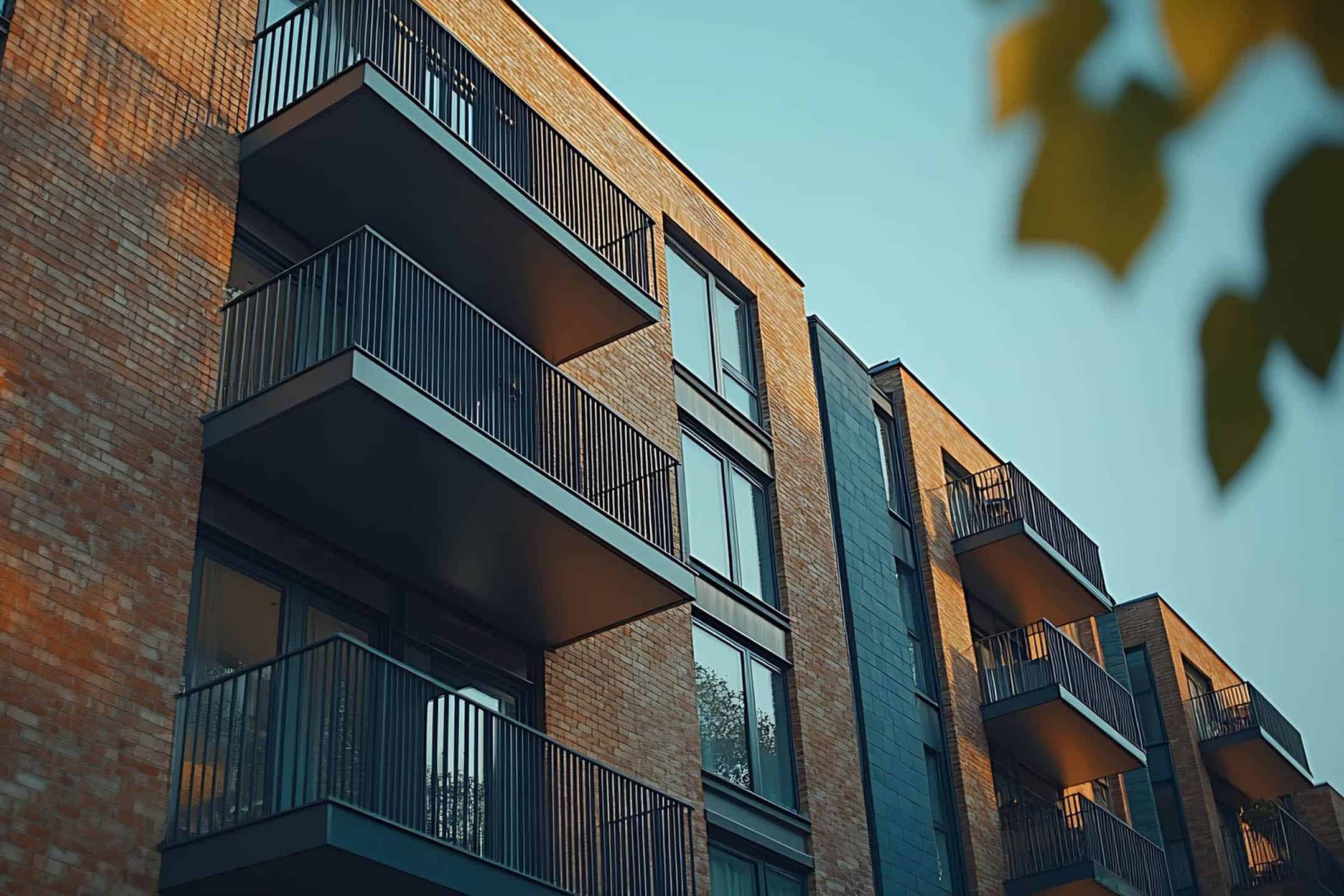
Apartment developments are structurally and legally different from single dwellings. Multiple units share foundations, load-bearing walls, roofs, stair cores, lifts and external envelopes. That complexity means a new build warranty for flats must protect far more than the four walls of an individual unit.
For developers delivering multi-unit schemes, understanding how an apartment new build warranty works is essential for lender acceptance, sales progression and long-term risk management.
Why New Build Flat Warranties Are Different
A detached house warranty focuses on one structure and one owner. A block of flats warranty UK arrangement must protect:
- Individual apartments
- Shared structural elements
- Common areas
- The building envelope
- Roof and foundations
- External walls and balconies
- Staircases and communal corridors
The warranty must respond not only to defects within a unit, but to defects affecting the building as a whole.
This is why apartment developments require specialist underwriting and inspection regimes. Stage inspections are more detailed. Structural design review is more intensive. Fire safety and compartmentation are scrutinised closely, particularly in taller buildings.
For a broader overview of cover fundamentals, see our new home warranty options.
Do New Build Flats Need a Warranty?
Yes. Mainstream mortgage lenders require a recognised new build warranty for flats constructed within the last 10 years. Without it, purchasers may struggle to secure finance.
The requirement is not optional for private sale developments. A lender-approved apartment new build warranty is effectively a prerequisite for marketability.
This is particularly important on phased apartment schemes where early units are sold before the block is fully complete.
Who Holds the Warranty – Developer, Freeholder or Leaseholder?
This is one of the most common points of confusion.
In a typical arrangement:
- The developer takes out the new build warranty for flats during construction.
- On completion, the policy is assigned to or held by the freeholder or management company.
- Individual leaseholders are named beneficiaries under the policy.
Leaseholders do not take out separate structural warranties for their individual units. The building is covered under one overarching block policy.
The ownership and beneficiary arrangements may differ for social housing schemes and PRS and build to rent developments, depending on the development structure.
Understanding this structure is critical for conveyancing and lender approval. Solicitors will request confirmation that the freeholder holds the warranty and that leaseholders have enforceable rights under it.
What Does a New Build Warranty Cover in a Block of Flats?
A block of flats warranty UK policy generally has two key elements.
Individual Unit Structural Cover
Each flat benefits from structural cover protecting:
- Load-bearing internal elements
- Structural floors and ceilings
- Structural walls
- Embedded structural waterproofing
Minor cosmetic issues are excluded, but structural defects caused by design, materials or workmanship are covered during the policy term.
Common Parts Cover
Common parts cover is equally important and often more significant from a risk perspective. It typically includes:
- Foundations and substructure
- External walls and cladding
- Roof structure
- Structural balconies
- Stair cores and structural corridors
- Structural elements supporting lifts
If common parts are defective, the financial impact can affect all leaseholders. This is why lenders and managing agents focus closely on block-wide protection.
Can Individual Flat Owners Claim on the Block Warranty?
Yes, but the claim is made against the block policy.
Where a structural defect affects a single unit, the leaseholder typically notifies the managing agent or freeholder, who then liaises with the warranty provider.
If the defect affects common parts, the freeholder or management company usually initiates the claim.
This structure reinforces why the developer must arrange a comprehensive new build warranty for flats at construction stage. It protects not only initial buyers but the long-term integrity of the entire building.
Do Lenders Require a New Build Warranty on Apartment Purchases?
Yes, for buildings constructed within the last 10 years.
Mortgage lenders require a recognised warranty provider for apartment purchases in new or recently completed blocks. Without it, lending is typically declined.
Buildings over 11 metres in height now attract additional scrutiny under the Building Safety Act 2022, including building safety case report requirements. Higher-risk buildings may be subject to enhanced regulatory oversight and extended liability considerations, with relevant documentation contributing to the golden thread.
For relevant buildings, the wider regulatory information may include a building safety case report.
For developers, this means:
- Early engagement with warranty providers is fundamental.
- Fire strategy and structural design must align with regulatory requirements.
- Documentation must be robust and inspection stages carefully managed.
Failure to align warranty and regulatory compliance can delay completion and sales.
How Does a New Build Flat Warranty Transfer When Sold?
When an individual flat is sold within the 10-year period:
- The warranty benefit automatically transfers to the new leaseholder.
- The freeholder continues to hold the overarching block policy.
Solicitors typically request the warranty certificate and confirmation of provider recognition during conveyancing.
Because the policy attaches to the building, not the individual owner, transfer is generally straightforward provided documentation is in order.
Which Warranty Providers Cover New Build Apartment Blocks?
Several major providers offer apartment new build warranty products, including:
- NHBC
- LABC
- Build-Zone
- Premier Guarantee
All are lender-approved for standard residential lending.
However, not all providers approach apartment blocks in the same way. Differences arise in:
- Height thresholds
- Cladding scrutiny
- Fire strategy requirements
- Inspection regime intensity
- Underwriting appetite for complex mixed-use schemes
This is why developers comparing providers should look beyond brand recognition.
For a broader comparison across the market, see our guide to building warranty providers compared. Our direct comparison NHBC vs LABC vs Build-Zone new home warranty compared also supports this analysis.
How to Arrange New Home Warranty Cover for Your Apartment Development
Arranging a block of flats warranty UK placement should begin before construction starts.
The typical process includes:
- Submission of drawings, specifications and fire strategy.
- Structural engineer calculations and ground investigation review.
- Technical appraisal by the warranty provider.
- Scheduled stage inspections during construction.
- Final certification on completion.
Because apartment schemes carry higher structural and regulatory risk, early submission reduces delays. If a flats or apartment block has already been completed without a Structural Warranty, explore Retrospective Warranty for Flats and Apartment Blocks.
Applying through Buildsafe simplifies the process. Instead of approaching each provider separately, you submit one application. Buildsafe sources quotes from multiple apartment-specialist providers and presents a structured comparison.
Not all providers are equally suited to every scheme. A six-unit low-rise block has very different underwriting considerations compared to a 12-storey city centre tower.
To begin comparison, get a quote and receive multi-provider options for your apartment development.
What Is the Best New Home Warranty Provider for Flats?
There is no universal answer.
The best new home warranty provider depends on:
- Building height
- Construction method
- Fire safety complexity
- Funding route
- Sales structure
- Programme timescale
NHBC may be appropriate for certain larger schemes or where frameworks require it. LABC can offer integration with building control. Build-Zone is often competitive on smaller blocks. Premier Guarantee can be strong on mid-rise developments.
The correct decision is project-specific.
Finding the Right Cover for Your Block Development
A new build warranty for flats is more complex than for single dwellings. The policy must protect both individual units and common parts. The developer takes out the warranty. The freeholder holds it. Leaseholders benefit from it.
Lender approval is mandatory for sales within the first 10 years. Buildings over 11 metres attract additional regulatory scrutiny under the Building Safety Act 2022.
Not all providers are equal on apartment blocks. Technical appetite, inspection rigour and underwriting flexibility vary.
Buildsafe is FCA-authorised and independent. One application allows us to compare all leading providers and identify the best fit for your scheme.
If you are planning or delivering a flat or apartment development, get a quote and receive independent guidance tailored to multi-unit projects.